www.aljazeerah.info
2026 News
Archives
Mission & Name
Conflict Terminology
Editorials
Gaza Holocaust
Gulf War
Isdood
Islam
News
News Photos
Opinion Editorials
US Foreign Policy (Dr. El-Najjar's Articles)
www.aljazeerah.info
|
Editorial Note: The following news reports are summaries from original sources. They may also include corrections of Arabic names and political terminology. Comments are in parentheses. |
***
Pakistan Delivers a Message Khamenei, Velayati Dismisses Geometry of Power, Iranian Strength in Internal Resilience and Solidarity
June 6, 2026
***
 |
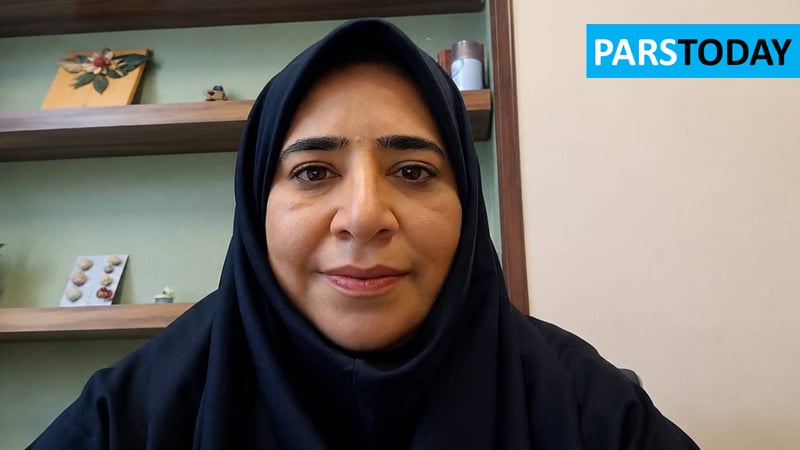 |
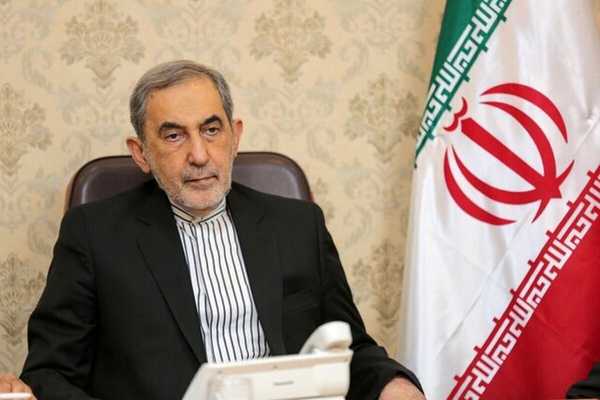
| Ali Akbar Velayati, adviser of the Iranian leader, said that the architecture of power in Iran will not be formed based on weakening the resistance, June 6, 2026. | Manijeh Firouzi discusses says the meaning of suffering, death, and resilience have always kept Iranians standing strong, June 6, 2026. |
 |
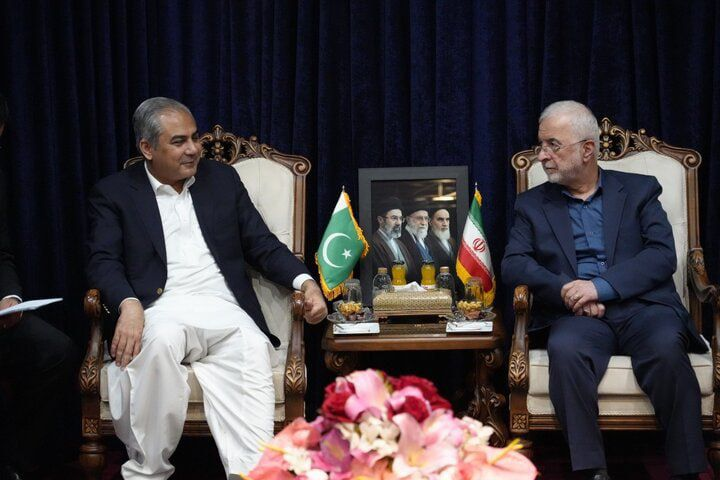 |
| Rosneft CEO Igor Sechin says China is the country best equipped to withstand the Strait of Hormuz crisis due to its energy security strategy., June 6, 2026 mayadeen | Pakistani Interior Minister, Eskandar Momeni, delivered a message from Army Chief, Asim Munir, to the Supreme Leader, Ayatollah Sayyid Mujatba Khamenei, June 6, 2026 manar |
Pakistan Delivers a Message Khamenei, Velayati Dismisses Geometry of Power, Iranian Strength in Internal Resilience and Solidarity, June 6, 2026 |
|
***
Velayati Dismisses New Geometry of Power Based on Weakening of Resistance
Al-Manar, June, 06, 2026
Referring to the Iranian nation’s resistance in the face of the US aggression, a senior adviser to the Leader of the Islamic Revolution said the architecture of power will not be formed based on weakening the resistance.
Ali Akbar Velayati, a senior adviser on international affairs to the Leader of the Islamic Revolution,
“The long-standing nightmare and historical fear of Western theorists that Iran is gaining power has become a reality, and a new geometry has been formed,” Ali Akbar Velayati, adviser to the Leader on international affairs, wrote in a post on X in response to the American media’s admission that the terrorist US government needs an agreement to reopen the Strait of Hormuz.
“The admission by Western media (Reuters and the Guardian) that Trump needs a temporary agreement to reopen the Strait of Hormuz indicates the failure of the Iranian threat doctrine and the victory of the authority of the resistance. However, the greater strategic error is made by those who are content with the mirage of compromise in the region,” he added.
Velayati emphasized that the new architecture of the geometry of power will not be formed based on weakening the heroic resistance.
He went on to say that diplomatic optimism has a heavy cost, and lasting peace comes from within the balance of power, not from the mirage of unsupported commitments.
***
Pakistani Interior Minister in Tehran Affirms Brotherly Relations: I Have Delivered a Message from Field Marshal Asim Munir to Ayatollah Khamenei
Al-Manar, June 6, 2026
Pakistan’s Interior Minister said he had delivered a special message from Field Marshal Asim Munir, Chief of Army Staff, to the Supreme Leader of the Islamic Revolution, Ayatollah Sayyed Mujatba Khamenei.
According to ISNA, during his meeting with Iran’s Interior Minister Eskandar Momeni in Tehran on Saturday, June 16, Pakistani Interior Minister Sayyed Mohsin Naqvi stated: “The Islamic Republic of Iran and Pakistan share deep historical, cultural, and religious ties, and these relations have always been friendly and brotherly.”
He added: “Pakistan has always supported Iran’s right to peaceful nuclear energy and has condemned aggression against Iran.”
Naqvi emphasized that Islamabad seeks to strengthen bilateral cooperation in the areas of security, border control, counter-terrorism, and trade, and said: “We believe that regional peace and stability can only be achieved through dialogue and cooperation among neighboring countries.”
The Pakistani Interior Minister noted that he was carrying a special message from Field Marshal Asim Munir, Chief of Army Staff of Pakistan, addressed to the Supreme Leader of the Islamic Revolution, Ayatollah Khamenei, indicating: “This message underscores Pakistan’s commitment to expanding strategic relations with Iran and resolving regional issues through consultation.”
For his part, Iran’s Interior Minister Eskandar Momeni welcomed the development of relations between the two countries and stated: “Iran and Pakistan, as two neighboring and Muslim countries, have a shared responsibility to maintain security and stability in the region.”
He added: “Tehran is ready to enhance cooperation with Islamabad in all fields, especially in border security and combating drug trafficking and terrorism.”
This visit by Pakistan’s Interior Minister to Tehran takes place amid rising regional tensions and ongoing efforts by regional countries to reduce tensions between Iran and the United States.
***
Iranian Deputy FM Slams IAEA Report
Tasnim, June, 06, 2026
An Iranian deputy foreign minister criticized the latest report by the International Atomic Energy Agency and remarks by its director general, saying concerns raised about Iran’s nuclear program stem from attacks by the US and the Israeli regime on safeguarded nuclear facilities.
In a post on his X account on Saturday, Deputy Foreign Minister for Legal and International Affairs Kazem Gharibabadi reacted to the IAEA’s latest report on the status of Iran’s nuclear program, and addressed comments by IAEA Director General Rafael Grossi regarding the lack of access to some damaged facilities, the status of Iran’s uranium stockpiles, and the issue of the alleged “loss of continuity of knowledge” in Iran’s nuclear program.
Gharibabadi said Grossi speaks of “ambiguity,” “lack of access,” and “loss of continuity of knowledge,” but this situation “did not arise in a vacuum.” He noted that nuclear facilities under IAEA safeguards had been targeted in military attacks by the United States and the Israeli regime, adding that the agency’s chief, who had shown himself to be “completely under the influence of the United States and the West,” never condemned those attacks.
He said it was unacceptable to ignore the source of the disruption and then use its consequences against Iran.
The deputy foreign minister added that if the issue is verification and non-proliferation, the first expectation from the IAEA director general should be a clear legal position against attacks on safeguarded facilities. Such attacks, he said, are not only a violation of Iran’s sovereignty but also a direct blow to nuclear safety, the safeguards system, and the credibility of the non-proliferation regime.
He questioned whether Grossi had the courage to finally take a position against an action by the US that violated international law and the United Nations Charter. Gharibabadi further argued that, given the director general’s political approach and dependence, Grossi could not be expected to independently and professionally manage the UN if he seeks the organization’s top post.
Gharibabadi also criticized the repeated reference to Iran’s 60-percent uranium enrichment level and discussions of possible weaponization scenarios, saying such arguments were “more political than technical” when presented without a precise legal framework.
He noted that the Treaty on the Non-Proliferation of Nuclear Weapons does not establish a numerical ceiling for enrichment levels and said the legal criterion is whether nuclear materials and activities are diverted toward military purposes. He underlined that Iran’s nuclear program has remained peaceful and the country has acted within its legal commitments.
He further argued that the IAEA cannot simultaneously report on the effects of military attacks, ignore the responsibility of those behind them, and then ask Iran to bear the technical and political costs of the insecurity created by the aggressors. “This is neither verification nor confidence-building,” he said.
According to Gharibabadi, if the agency wants to be part of a diplomatic solution, it must avoid turning technical reports into instruments of political pressure. He said safeguards are not strengthened through military action, threats, or resolutions, but rather through impartiality, respect for international law, respect for state sovereignty, and the explicit condemnation of attacks on facilities monitored by the IAEA.
He concluded by saying that safeguarded facilities cannot be bombed, the access and safety conditions necessary for inspections cannot be destroyed, and then the consequences of those same attacks cannot be used as grounds for raising ambiguity against Iran.
Iranian Deputy FM Slams IAEA Report - Politics news - Tasnim News Agency
***
A look at Iranian resilience and solidarity: Pars Today's interview with Associate Professor Manijeh Firouzi
Pars, June 7, 2026
Dr. Manijeh Firouzi, an Associate Professor at the Faculty of Psychology and Educational Sciences, University of Tehran.
Pars Today – Iran is a land of perseverance; a land where life is always in motion. Dr. “Manijeh Firouzi,” a health psychologist and professor at the University of Tehran, believes that Iranians, by relying on culture, literature, empathy, and hope, have been able to build one of the most resilient societies in the region— a society that, despite certain challenges, continues to look toward the future, creates life, and does not stop moving forward.
In an interview with Pars Today, Dr. Firouzi discusses the meaning of suffering, death, resilience, and the characteristics that, in her view, have always kept Iranians standing strong. Below is an excerpt from the interview:
Please introduce yourself.
“My name is Manijeh Firouzi. I hold a PhD in Health Psychology and a fellowship in Psycho-Oncology from the University of Tehran. I am currently an Associate Professor at the Faculty of Psychology and Educational Sciences, University of Tehran. I also hold a UNESCO virtual chair in my field of specialization.”
What is health psychology and why did you choose this field?
Health psychology is essentially a field that studies the psychological aspects of human emotions, thoughts, and behaviors. Based on my specialization, I work alongside patients who live with chronic illnesses, particularly cancer, and I try to help them and their families go through the course of the illness with greater ease and peace of mind.
I chose this field because in today’s world, due to changes in lifestyle, climate change, air pollution, and many other factors, chronic diseases are on the rise, and patients more than ever need support, education, and companionship. I lost my brother to cancer, and after that, I became even more determined to use my expertise to help patients.
If you were to define life in a single perspective, what definition would you give?
I think life is the continuation of a large human stream—a flow that began millions of years ago and has continued generation after generation until it has reached us today. We are the extension of the dreams, sufferings, love, and experiences of the generations that lived before us, and after us as well, something of us will remain in the world.
In fact, we do not belong only to the present moment; we are tied to the past and connected to the future. Human beings continue through memory, experience, love, and the impact they leave behind. Perhaps this continuity and “ongoingness” is the meaning of life—that none of us are born without meaning.
In your view, what responsibility does a human being have toward life?
We are born to use our abilities and inner capacities, to grow, and to experience life more deeply. In my view, a human being has a responsibility toward life—to know themselves better, to live better, and to add something to the world.
These days, “resilience” is widely discussed. How do you explain this concept?
Resilience means that a person is able to endure and continue living despite suffering, hardships, and the complexities of life. Human history is a history of continuation; our ancestors survived despite all difficulties and passed life on to the next generations. We also have this capacity within us to pass through crises and rise again.
Life is not meant to always be easy or aligned with our desires, but it is meant to be lived, continued, and given meaning—even if its end is death.
What does death mean in your worldview?
In my view, the meaning of death should be sought within the meaning of life itself. A person who has been able to experience life deeply, consciously, and with full presence can also give meaning to death. This perspective has deep roots in our literature and mysticism.
In Iranian culture, death is not merely the end of life; it is a kind of arrival, transformation, and union with a greater truth. Attar, in The Conference of the Birds, beautifully narrates this journey, where the birds, after a long and difficult journey, ultimately reach the Simurgh. Human beings, too, at the end of the journey of life, come closer to a deeper and more eternal truth.
What characteristics do you think have made Iranian society strong in times of crisis?
I believe Iranian society has assets that prevent it from falling apart in difficult times. The most important of these is the bond between people. In moments of crisis, Iranians tend to move closer to one another, and a sense of empathy and solidarity becomes more prominent in society.
The more difficult the conditions, the more Iranians care for each other, stand together, and are willing to sacrifice their own comfort so that others suffer less. I believe this human and collective spirit is one of the most important reasons for the resilience of Iranian society.
Where do you see the roots of empathy and solidarity in Iranian society?
I think the roots of this empathy are largely connected to our history and collective experience. This land has, over centuries, repeatedly experienced war, crisis, and difficult times, and this has shaped a spirit of survival and togetherness in our culture.
We have learned that despite all differences, we must stand together in times of danger and crisis, because in our collective unconscious we know that our continuation depends on this solidarity. Perhaps this is why the more difficult the conditions become, the more acts of compassion, empathy, and care for one another emerge in Iranian society.
What cultural and historical assets have helped Iranians overcome crises?
In our Iranian-Islamic culture, the view of life and suffering is not merely material or transient; rather, it is rooted in meaning, wisdom, and the belief in a purposeful existence. This deep worldview is one of our most important assets in facing crises.
We possess a very rich literary tradition—literature that has been able to give meaning and depth to both individual and collective suffering. This act of giving meaning to suffering directly contributes to increasing resilience in society.
In the cultural and religious outlook of Iranians, life is not meaningless, and death is not seen as a purely empty end. Even death, if it is accompanied by dignity and meaning, can be placed within the continuation of a meaningful life and add value to it. This perspective, in difficult historical moments, has helped shape a sense of identity, dignity, and even collective pride.
On the other hand, Persian literature is not merely a collection of poetry and narratives; it is a kind of psychological and mental refuge for the Iranian people. In this literature, we are constantly confronted with concepts such as hope, suffering, love, and perseverance. This continuity of meaning prevents individuals from falling into a sense of emptiness during crises and helps them maintain the strength to continue.
How is hope understood in Iranian society?
Hope exists in Iran. The Iranian narrative is not one of helplessness; it is a narrative of life and continuation. We see this in people’s everyday lives. Even in difficult days, life continues to flow in society. For instance, during the Ramadan war, we repeatedly witnessed that after every attack and painful incident, life resumed in the city: shops reopened, people returned to the streets, and society once again came back to activity and movement. This act of continuing is itself a sign of hope.
You have previously referred to the role of human narratives in overcoming difficulties. In your view, what is the Iranian narrative of life, and how does it differ from a narrative of despair and helplessness?
In my view, the Iranian narrative of life is, above all, a narrative of continuation and keeping the flow of life alive. Unlike perspectives based on helplessness and stagnation, it emphasizes the capacity for movement and persistence, and this in turn strengthens a sense of empowerment in society.
Signs of this outlook can be seen in people’s daily lives, where even in difficult conditions and moments of crisis, life does not stop. This continuity shows that at the core of this narrative there is a belief in life and in the ability to go on—a belief that does not allow society to fall into stagnation or surrender in the face of hardship.
If you had to name three prominent characteristics of Iranians, what would they be?
First, Iranians are inherently cheerful people. Especially when levels of anxiety and psychological pressure decrease, Iranians tend to become happier and more lively. Part of this trait is related to our climate; we are a country with abundant sunlight, and sunlight has a physiological effect on happiness.
The second characteristic is intelligence. I have worked with students for many years, and I truly believe Iranians are very intelligent. Many young Iranians, despite difficulties, continue to strive, learn, and create new ideas.
The third is perseverance. Iranians are hardworking people who pursue their goals persistently and do not easily give up.
What are the most important moral traits of Iranians in your view?
Kindness, humanism, and patience. I believe Iranian society still has a strong capacity for empathy and mutual care, which is a very valuable trait.
What does “homeland” mean to you?
For me, homeland means “home,” and home means everything—a place where I live, where I feel happiness and sorrow, where I find peace, love, and effort. Home gives a person identity and meaning.
What is your wish for Iran?
Greater prosperity and flourishing. Of course, we have enemies, but Iran has found—and will continue to find—its own path. I believe that Iran, by relying on its human, cultural, and social capacities, can build a brighter and more peaceful future.
***
China best positioned to weather Hormuz Strait disruption: Rosneft CEO
Al Mayadeen, TASS, June 6, 2026
Rosneft CEO Igor Sechin says China is the country best equipped to withstand the Strait of Hormuz crisis due to its energy security strategy.
China has emerged as the country most capable of managing the fallout from the Strait of Hormuz crisis due to its long-term energy planning and extensive investments in alternative energy and transport systems, Rosneft CEO Igor Sechin said on Saturday.
Speaking at the St. Petersburg International Economic Forum, Sechin argued that Beijing's energy strategy has provided the country with significant resilience amid disruptions affecting global oil and gas markets.
"China turned out to be the most prepared for the Hormuz crisis and its consequences thanks to a balanced approach to ensuring energy security based on a realistic assessment of risks. A well-thought-out state policy has made it possible to achieve significant economies of scale in the development of renewable energy sources," Sechin said.
According to Sechin, China's investments in electric mobility and public transportation have reduced its vulnerability to supply shocks. He said the country's consumers have access to alternatives such as electric cars, electric buses, metro systems, electric trains, electric taxis, and gas-powered freight transport, helping cushion the impact of disruptions to maritime energy routes.
The Rosneft chief also pointed to China's low electricity costs, which he said provide a major competitive advantage for both industry and households. Industrial power prices in China are significantly lower than those in several major European economies, while residential electricity rates remain well below those in the United States.
China's energy expansion
China's energy infrastructure has expanded rapidly over the past decade. Sechin noted that the country now operates the world's largest electricity system, with installed generation capacity of around 4,000 gigawatts. More than 540 gigawatts of new capacity were added in 2025 alone, an amount he said is equivalent to roughly half of the European Union's total installed generating capacity.
Renewable energy has played a central role in that expansion. Chinese solar and wind power generation has increased tenfold over the last decade, reaching approximately 2,300 terawatt-hours following investments totaling $2.2 trillion.
Beijing has also become the leading market for battery energy storage, accounting for about half of all new global installations annually. At the same time, China is advancing the world's largest nuclear energy construction program, with 61 reactors in operation and another 39 under construction.
Sechin added that China's power transmission network extends for roughly 1.6 million kilometers, surpassing the combined transmission infrastructure of the United States, the European Union, and India.
US companies gained from market turmoil
Sechin also argued that the closure of the Strait of Hormuz had exposed weaknesses in the global energy system and ultimately benefited American energy producers.
"The closure of the Strait of Hormuz is an attempt to reshape global energy market regulations to benefit the United States. The measures taken to block the strait were aimed at Iran, but backfired on the entire world. The strategic risks were underestimated," Sechin said.
"The main beneficiaries, of course, were American companies, who gained non-competitive advantages and the ability to secure high-cost supplies," he added.
He warned that disruptions in Hormuz could create wider instability across global trade routes, citing the Straits of Malacca, Bab al-Mandeb, and Gibraltar as other critical chokepoints vulnerable to future disruptions.
The closure of the waterway followed the US-Israeli war on Iran, which severely disrupted shipping through one of the world's most important energy corridors. The crisis sent oil prices sharply higher, intensified inflationary pressures and raised concerns about global economic growth.
Questions over OPEC+'s influence
The Rosneft chief also expressed doubts about the long-term strength of the OPEC+ alliance, saying the group's influence has weakened following the departure of several members, including the United Arab Emirates and previously Qatar.
"As a result, the alliance's production has fallen from 58 to 37 million barrels per day over the past ten years," Sechin said.
He noted that while most major OPEC+ producers have increased output since the group's cooperation framework was established in 2016, Russian oil production has moved in the opposite direction.
"This is a 15% decline that will need to be offset by necessary investments of at least ten trillion rubles. We expect that investment cooperation between the alliance's member countries and our country will also expand," Sechin said.
China best positioned to weather Hormuz Strait disruption: Rosneft CEO | Al Mayadeen English
***
Trump’s Threat Against Oman Exposes Chaos Inside the White House: The Independent
Al-Manar, May 30, 2026
A cabinet meeting chaired by US President Donald Trump on Wednesday descended into what columnist Holly Baxter described as a “chaotic spectacle” marked by military threats, bizarre jokes, and rambling discussions about construction projects, exposing deep disorder within the White House decision-making process.
In an article published by The Independent, Baxter mocked the atmosphere of the meeting, saying that placing figures such as Secretary of War Pete Hegseth and Vice President JD Vance in the same room made the gathering resemble “a Fox News episode under the influence.”
According to the article, tension was evident throughout Trump’s remarks despite his attempts to project confidence ahead of the upcoming midterm elections.
Baxter argued that Trump “always reveals what worries him without realizing it,” noting that his repeated insistence that he was unconcerned about the elections reflected growing political anxiety, particularly as recent polling has shown declining support even among some Republicans over his Iran policies.
During the meeting, Trump declared, “I don’t care about the midterms,” referring to the congressional elections, a statement the article portrayed as contradicting his visible unease.
From Iran to Construction Obsessions
The article said the meeting took an increasingly strange turn when Trump abruptly shifted from discussing Iran and foreign policy to lengthy remarks about renovation and construction plans in Washington.
Baxter compared the atmosphere to “an annual meeting at a Florida retirement complex debating maintenance budgets,” as Trump spoke extensively about granite, colors, rubber materials, and projects he hoped to build, including a “Victory Arch.”
The president, she wrote, appeared like “a grandfather explaining tedious construction details to uninterested grandchildren,” while continuing to drift through endless engineering discussions.
Amid the rambling exchange, Trump reportedly made a startling remark about Oman, saying the Gulf state “will act like everyone else or we’ll have to blow it up,” a statement Baxter said passed “with frightening speed despite its seriousness.”
Trump and His War Team
The article also focused on Trump’s relationship with Hegseth. At the beginning of the meeting, Trump reportedly turned toward the defense secretary, patted his muscles, and joked: “He loves war… I don’t, but he loves it.”
Baxter said Hegseth attempted to maintain the image of a “tough warrior” but appeared uncomfortable as Trump treated him more like “a grandfather teasing a grandson obsessed with military toys.”
When given the opportunity to speak, Hegseth launched into what the article described as an overly enthusiastic speech about bombs, aircraft, “lethality,” and the so-called “epic rage” operation against Iran.
Trump later responded with a brief “good job,” which Baxter likened to congratulating “a kindergarten child showing off too much.”
The article further criticized Vice President JD Vance, portraying him as someone who speaks as though he alone carries the burden of “saving morality and order,” while other officials directed angry rhetoric toward protesters and immigrants.
Baxter concluded that the most alarming aspect was not the bizarre nature of the meeting itself but how routine such scenes have become inside the US administration. She argued that the United States now appears to be governed “according to the rhythm of a man drifting between television news broadcasts and renovation projects,” while dragging the world along with him.
***
Fair Use Notice
This site contains copyrighted material the
use of which has not always been specifically authorized by the copyright
owner. We are making such material available in our efforts to advance
understanding of environmental, political, human rights, economic,
democracy, scientific, and social justice issues, etc. We believe this
constitutes a 'fair use' of any such copyrighted material as provided for
in section 107 of the US Copyright Law. In accordance with Title 17 U.S.C.
Section 107, the material on this site is
distributed without profit to those
who have expressed a prior interest in receiving the included information
for research and educational purposes. For more information go to: http://www.law.cornell.edu/uscode/17/107.shtml.
If you wish to use copyrighted material from this site for purposes of
your own that go beyond 'fair use', you must obtain permission from the
copyright owner./font>
|
||||||||||||||||